University Dance Center
Designing a booking & payment system that reduces student dropout by up to 40%
UX Research · UI Design · Real Client · 2026 · In Progress
University Dance Center
Designing a booking & payment system that reduces student dropout by up to 40%
UX Research · UI Design · Real Client · 2026 · In Progress
Context
A real business losing 30–40% of students every course cycle. Not because of bad courses, but because the system made it too easy to walk away.
Context
A real business losing 30–40% of students every course cycle. Not because of bad courses, but because the system made it too easy to walk away.
Problem
University Dance Center had no deposit system, no digital registration, and no automated communication.
Every signup, cancellation, and reminder was handled manually by phone and email, including weekends. With no financial commitment from students, 30–40% simply didn't show up each cycle.
Problem
University Dance Center had no deposit system, no digital registration, and no automated communication.
Every signup, cancellation, and reminder was handled manually by phone and email, including weekends. With no financial commitment from students, 30–40% simply didn't show up each cycle.
Goal
Reduce the student dropout rate from 30–40% to 10–15% within 6 months of launch.
Secondary goals
online registration with advance payments
automated email and SMS communication
self-service cancellations
waitlist management
Goal
Reduce the student dropout rate from 30–40% to 10–15% within 6 months of launch.
Secondary goals
online registration with advance payments
automated email and SMS communication
self-service cancellations
waitlist management
Process
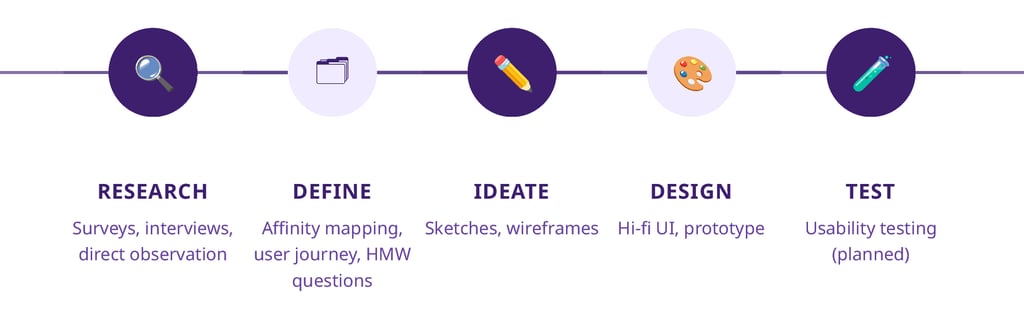
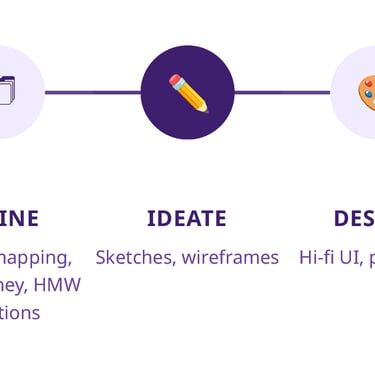
Process
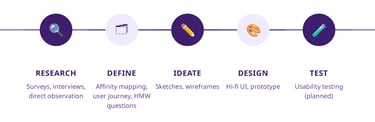
Understanding the user
To validate the owners' hypotheses, I designed a questionnaire targeting current and former students. 80 people responded.
As a dance instructor at the school, I also had direct access to candid, unfiltered feedback from students. The kind that formal surveys sometimes miss.
What the data showed
Dropout reasons had nothing to do with course quality:
31× Change of plans: family, work, schedule conflicts
20× Health issues
17× Schedule conflict
9× Logistical issues: course moved, no space, organisational problems
3× Course wasn't the right fit
Key insight
When cancelling costs nothing, students disappear. The problem wasn't dissatisfaction, it was zero commitment friction. No deposit, no digital confirmation. Even with reminders sent, students who hadn't paid felt no real obligation to show up.

Affinity Mapping
Understanding the user
To validate the owners' hypotheses, I designed a questionnaire targeting current and former students. 80 people responded.
As a dance instructor at the school, I also had direct access to candid, unfiltered feedback from students. The kind that formal surveys sometimes miss.
What the data showed
Dropout reasons had nothing to do with course quality:
31× Change of plans: family, work, schedule conflicts
20× Health issues
17× Schedule conflict
9× Logistical issues: course moved, no space, organisational problems
3× Course wasn't the right fit
Key insight
When cancelling costs nothing, students disappear. The problem wasn't dissatisfaction, it was zero commitment friction. No deposit, no digital confirmation. Even with reminders sent, students who hadn't paid felt no real obligation to show up.

Affinity Mapping
Define
Based on the research findings, I reframed the challenge into five core design questions:
How might we create a sign-up form for users so that people come and owners don't lose money?
How might we make students feel financially committed before a course starts?
How might we reduce the time owners spend answering repetitive questions?
How might we give owners real-time visibility into who is actually coming?
How might we make cancellations and waitlist management automatic?
Define
Based on the research findings, I reframed the challenge into five core design questions:
How might we create a sign-up form for users so that people come and owners don't lose money?
How might we make students feel financially committed before a course starts?
How might we reduce the time owners spend answering repetitive questions?
How might we give owners real-time visibility into who is actually coming?
How might we make cancellations and waitlist management automatic?
User journey maps
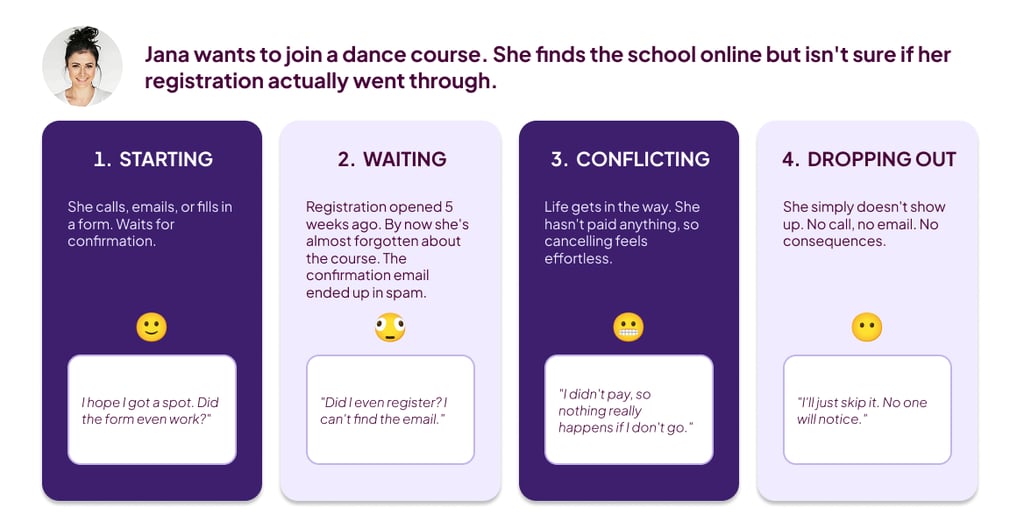
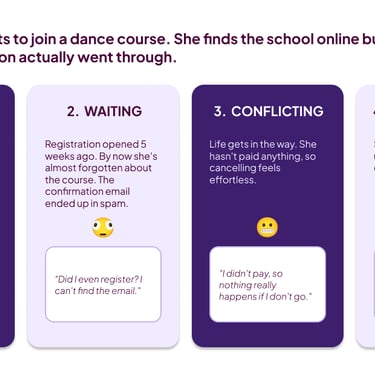
SCENARIO 1 - STUDENT SIGNS UP FOR A COURSE
SCENARIO 2 - OWNER MANAGES COURSE DAY
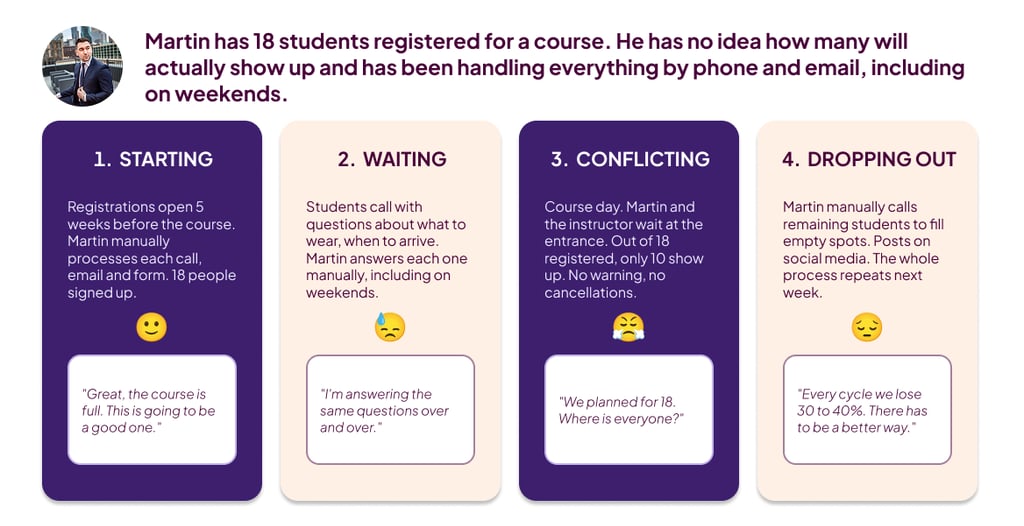
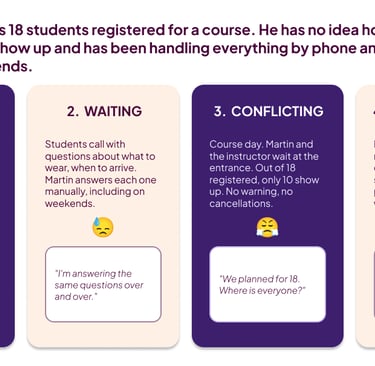
Due to the wide age range across different course types (18–75+), creating a single representative persona would have been misleading. Instead, I mapped two user journeys to capture the real pain points on both sides.
User journey maps
SCENARIO 1 - STUDENT SIGNS UP FOR A COURSE
SCENARIO 2 - OWNER MANAGES COURSE DAY
Due to the wide age range across different course types (18–75+), creating a single representative persona would have been misleading. Instead, I mapped two user journeys to capture the real pain points on both sides.
User flows
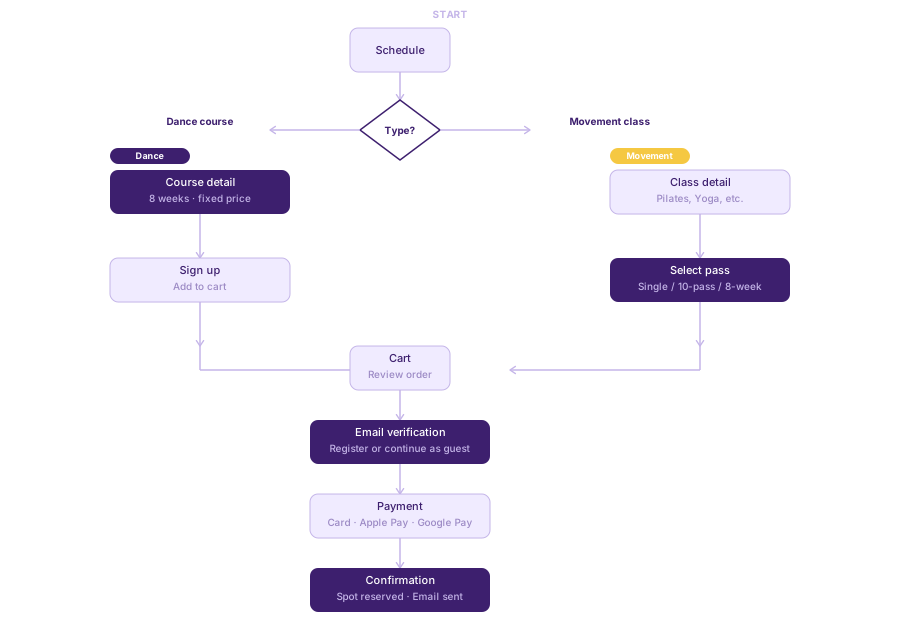
The school offers two activity types each with a different payment model.
I designed one unified flow that handles both, merging at checkout for a consistent booking experience.
User flows
The school offers two activity types each with a different payment model.
I designed one unified flow that handles both, merging at checkout for a consistent booking experience.
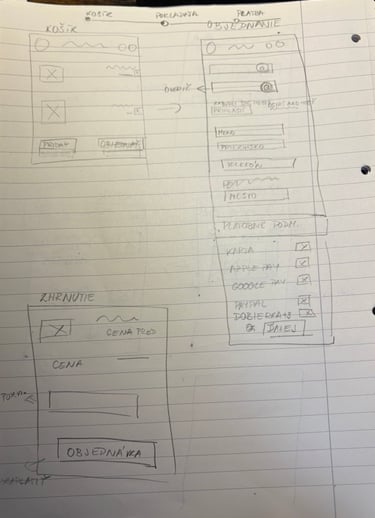
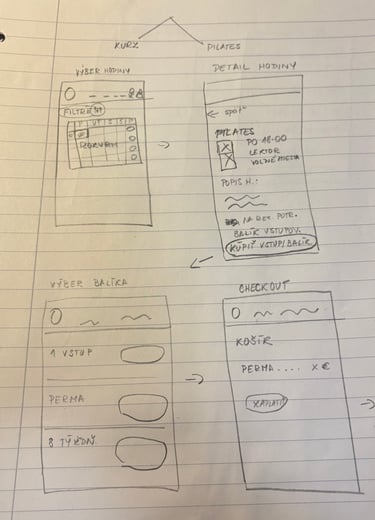
Paper wireframes
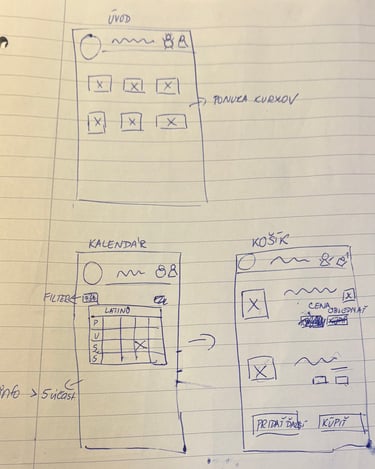
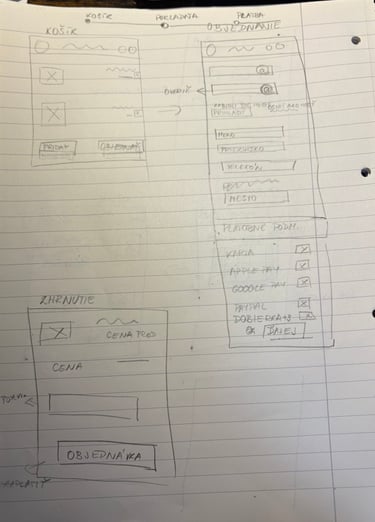
Before moving to digital, I sketched the key screens by hand. This helped me quickly explore layout options and validate the flow without getting stuck on visual details too early.
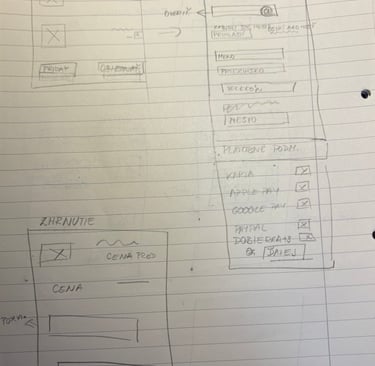
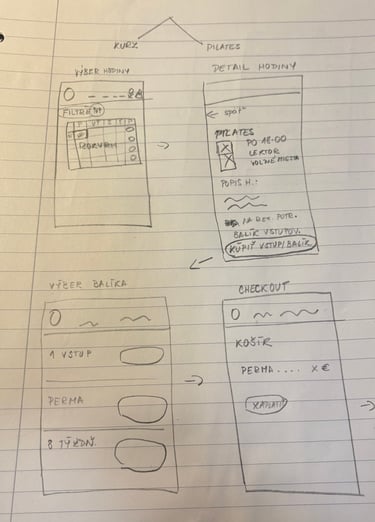
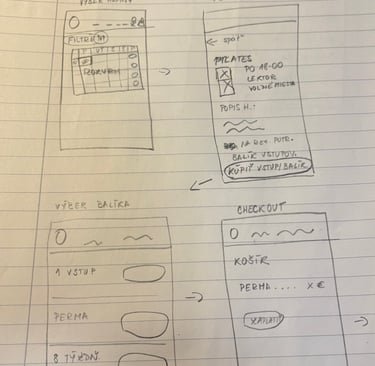
Paper wireframes
Before moving to digital, I sketched the key screens by hand. This helped me quickly explore layout options and validate the flow without getting stuck on visual details too early.
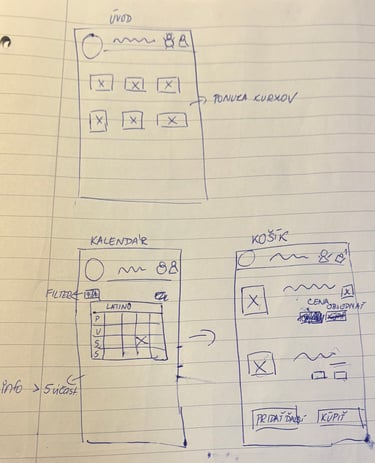
Hi-fi UI design
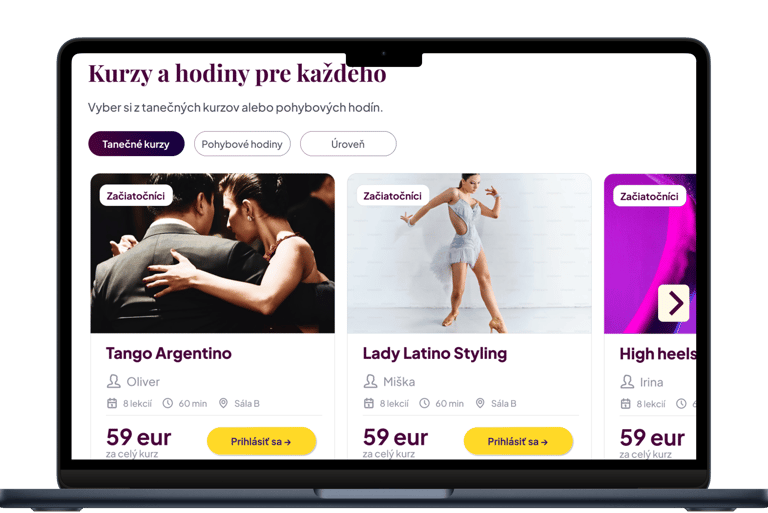
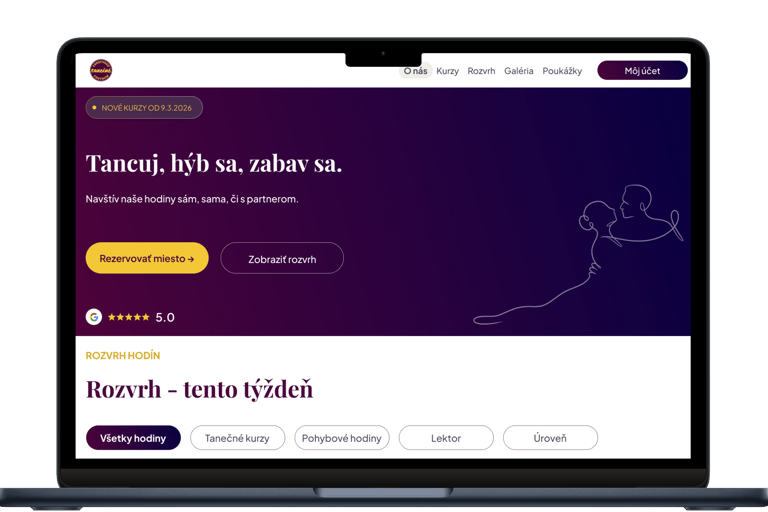
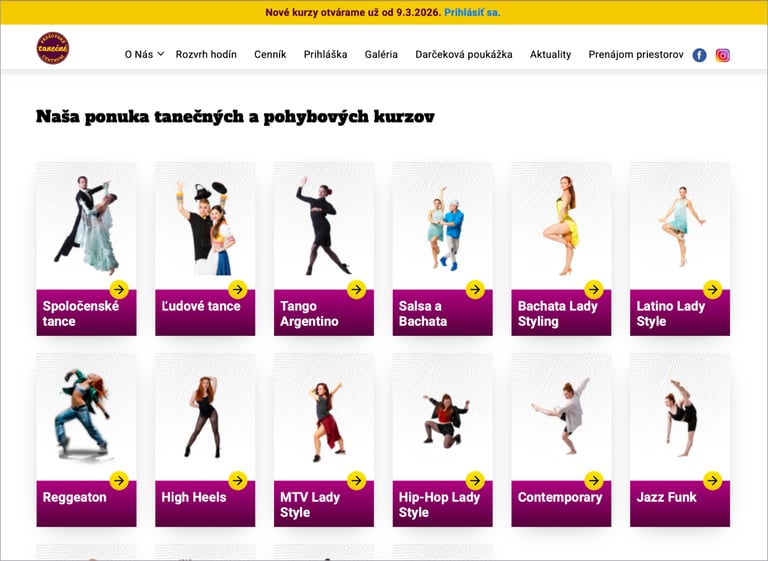
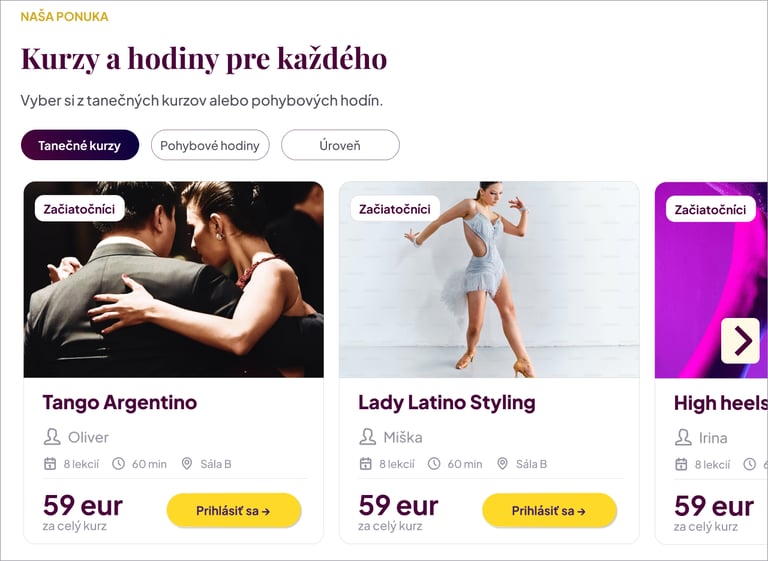
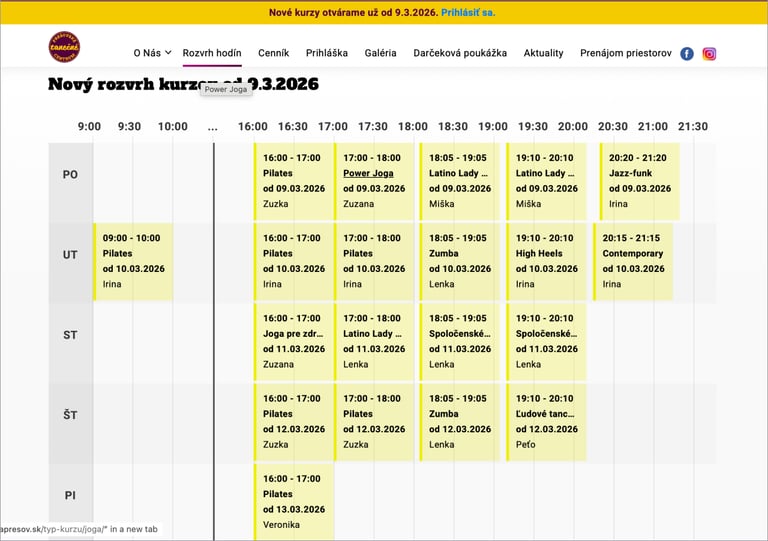
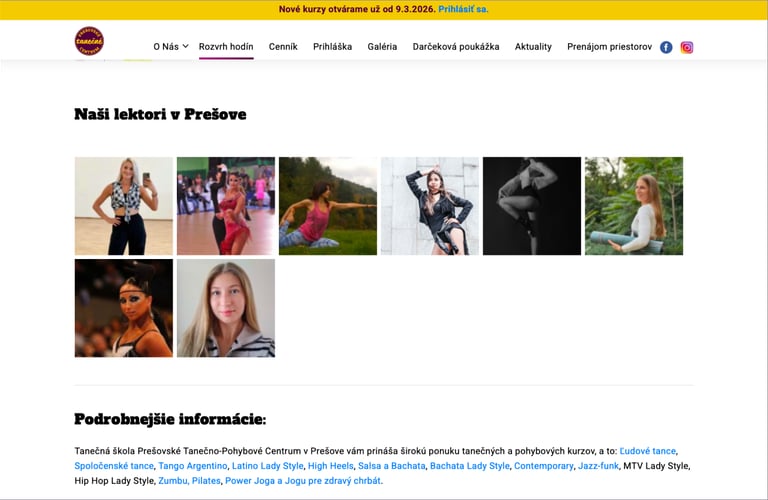
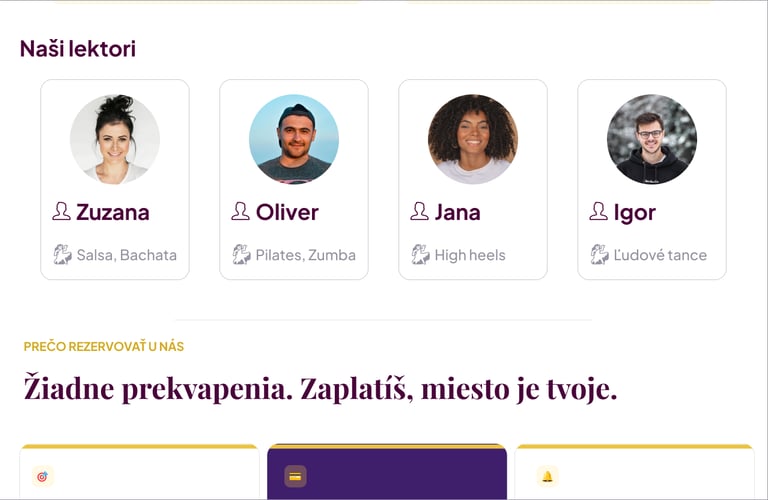
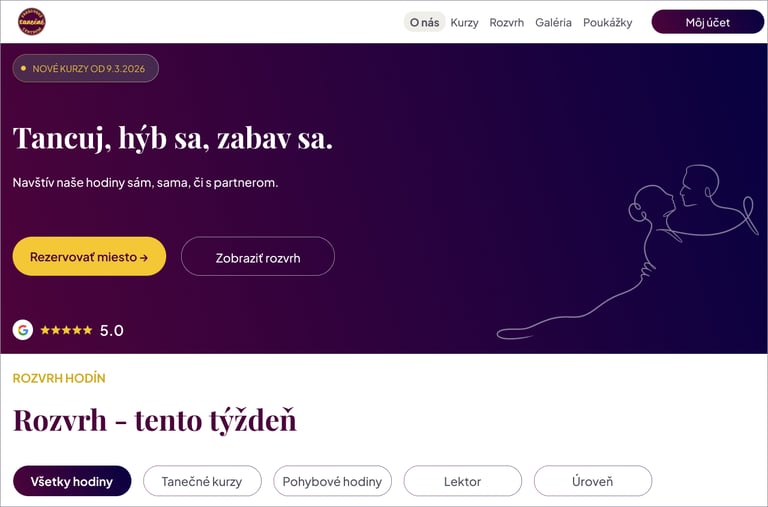
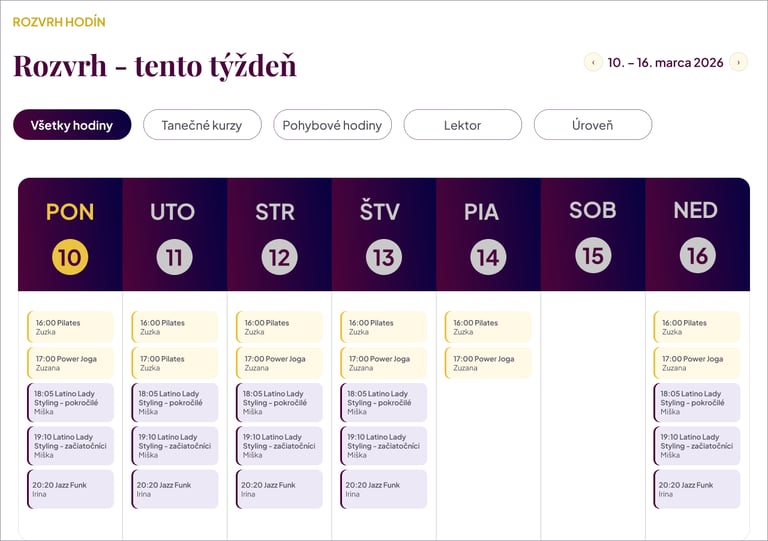
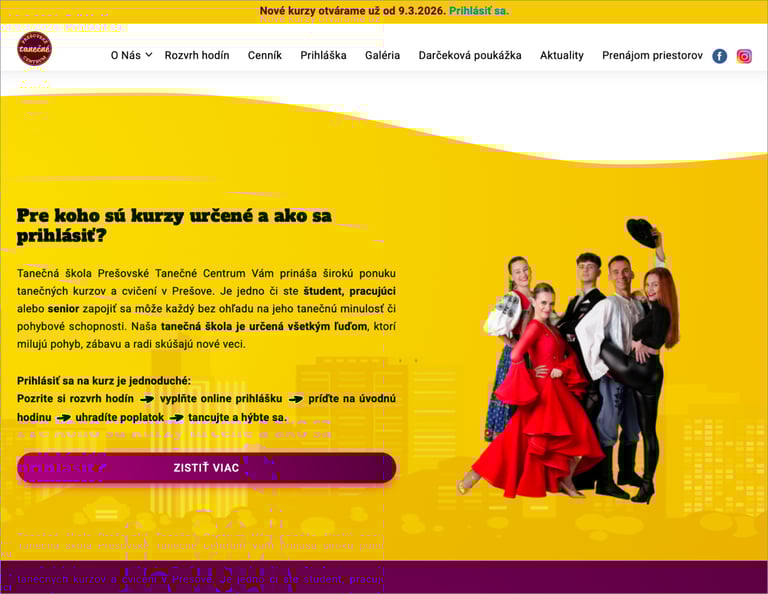
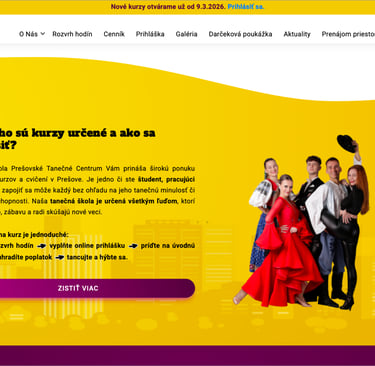
The owners wanted the website in the colors: deep purple, warm yellow, and clean white. My focus was on clarity, trust, and making the booking process feel as straightforward as possible.
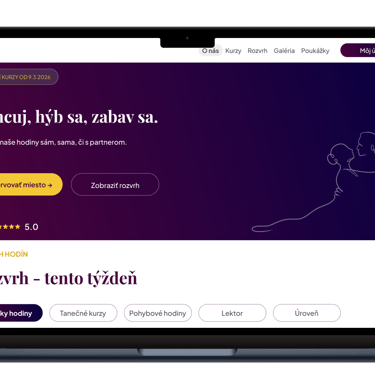
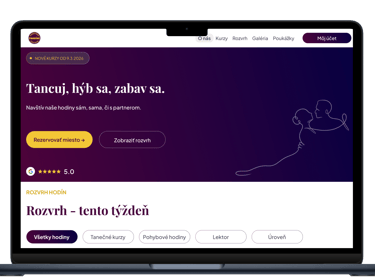
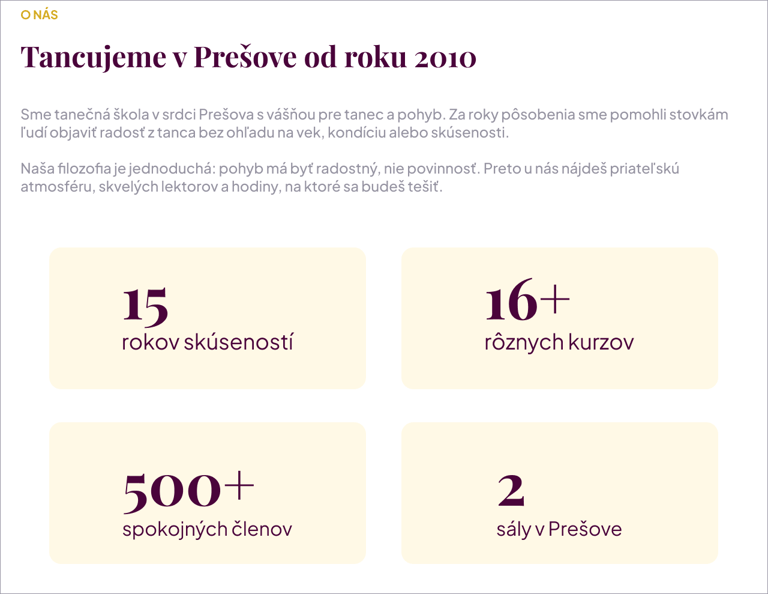
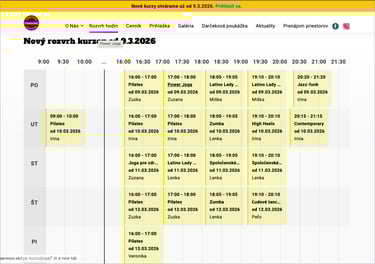
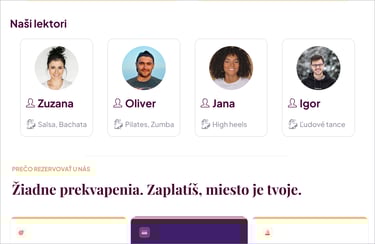
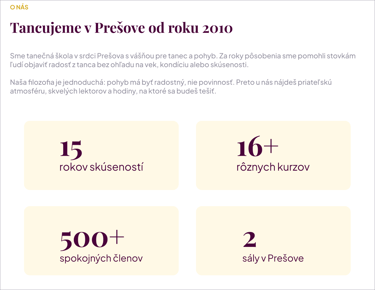
Key screens designed so far: homepage with live schedule, course listing with filtering, instructor profiles, and the "About us" section with key stats.
Before/After
Homepage
Courses
Timetable


Teachers
About us

Hi-fi UI design
The owners wanted the website in the colors: deep purple, warm yellow, and clean white. My focus was on clarity, trust, and making the booking process feel as straightforward as possible.
Key screens designed so far: homepage with live schedule, course listing with filtering, instructor profiles, and the "About us" section with key stats.
Before/After
Homepage before
Courses before
Timetable before
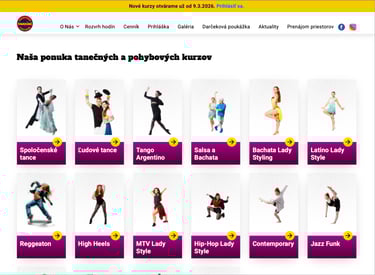

Teachers before
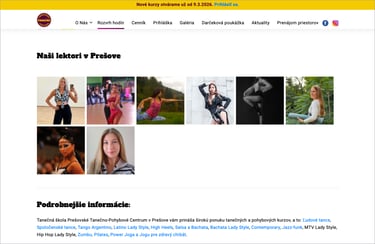

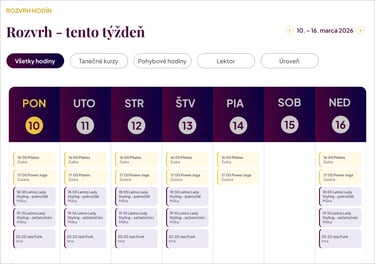
About us before
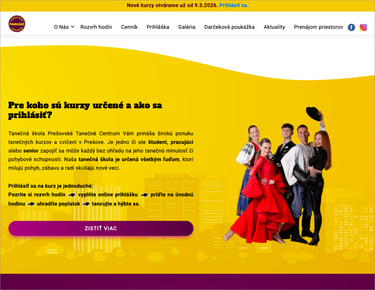
Homepage after
Courses after
Teachers after
Timetable after
About us after
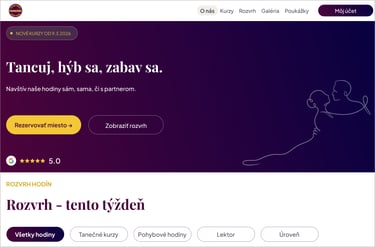
Current status & Next steps
Current status
Completed:
user research
user journey maps
define phase
user flows
paper wireframes
In progress:
hi-fi wireframes
prototypes
client's review
Planned:
usability testing with real students
iteration based on feedback
developer handoff
Expected impact
If successfully implemented, the system should reduce the dropout rate from 30–40% to 10–15% within 6 months. Owners will no longer manage registrations, reminders, or cancellations manually. This will save dozens of hours every month, including weekends.
This case study will be updated with usability testing results and live data once the system is deployed.
Current status & Next steps
Current status
Completed:
user research
user journey maps
define phase
user flows
paper wireframes
In progress:
hi-fi wireframes
prototypes
client's review
Planned:
usability testing with real students
iteration based on feedback
developer handoff
Expected impact
If successfully implemented, the system should reduce the dropout rate from 30–40% to 10–15% within 6 months. Owners will no longer manage registrations, reminders, or cancellations manually. This will save dozens of hours every month, including weekends.
This case study will be updated with usability testing results and live data once the system is deployed.